2026-10-05
What Is a Substation?
A substation changes voltage and switches power between lines, using transformers, switchgear and protection relays to keep electricity moving safely.
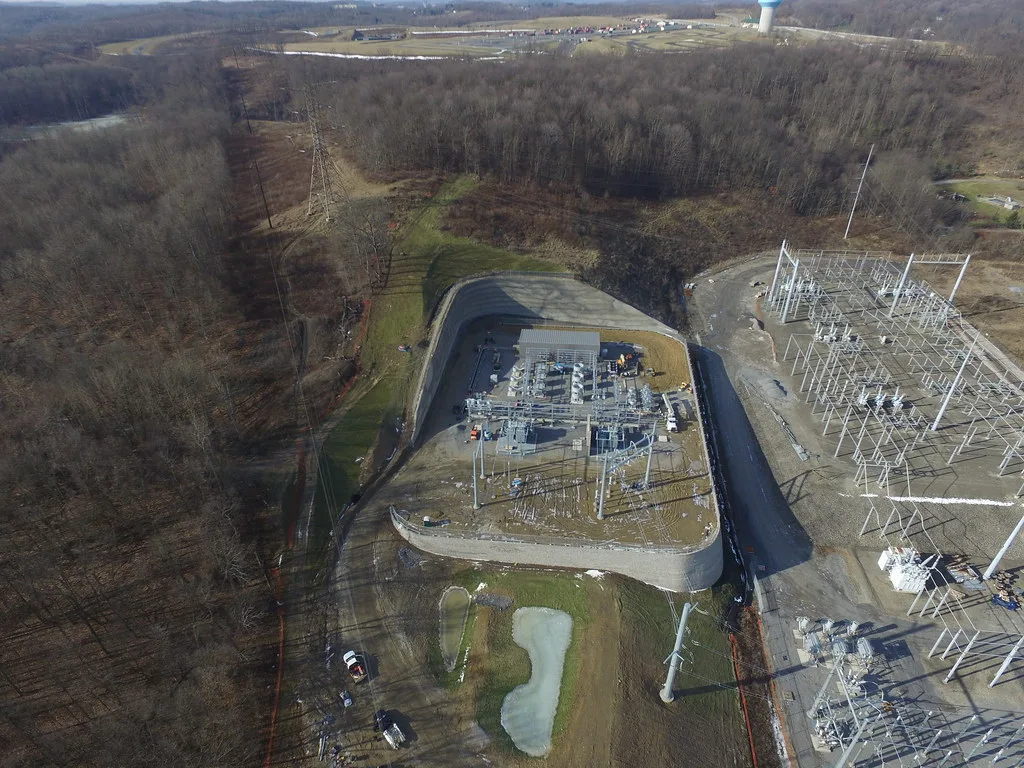
Photo: FirstEnergy Corp. · CC BY-ND 2.0 · openverse.org
What does a substation actually do?
A substation moves electricity between parts of the grid and changes its voltage along the way. Step-up transformers raise the voltage leaving a generating plant so power can travel long distances efficiently, and step-down transformers lower transmission-level voltage to what a distribution network, and eventually a home or factory, can use. Some substations also convert between alternating and direct current, or interconnect two separate grids so power can flow between them.
What equipment is inside one?
Behind the fence, a substation is built from a handful of equipment groups. Transformers handle the voltage conversion, and even a well-designed unit still loses somewhere between 1.5 and 5 percent of what passes through it as heat and noise. Switchgear, led by high-voltage circuit breakers, interrupts current flow so a section of the network can be isolated during a fault or for maintenance. A control room nearby houses the protective relays, meters, breaker controls and the batteries that keep all of it working the moment the incoming AC supply trips, and busbars carry the current between each piece of equipment.
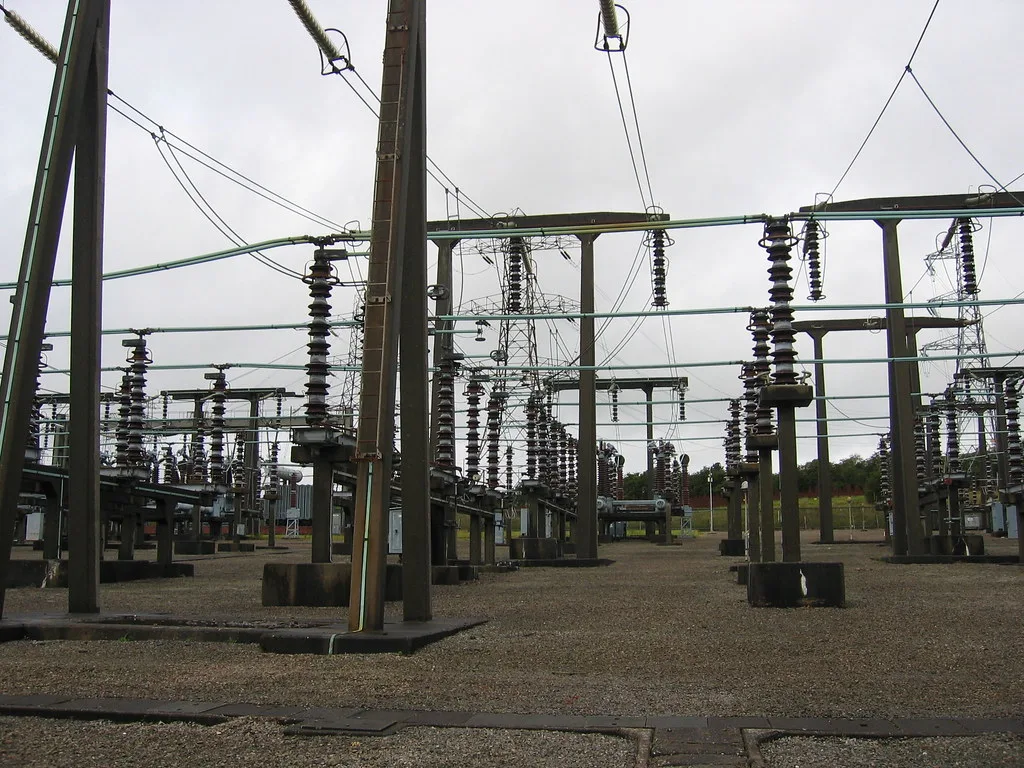
Photo: cowlet · CC BY 2.0 · openverse.org
How is a substation organized?
Engineers split a substation's design into three systems: the primary system is everything that runs at the substation's own highest operating voltage, the secondary system is everything that controls, protects, monitors and measures that primary equipment, and the auxiliary system is what keeps the other two running, from station power to battery chargers. Layout follows from that split: a common arrangement keeps the conductors on two levels, busbars above and switchgear connections below, so maintenance routes and the safety clearances around live equipment stay clear and consistent.
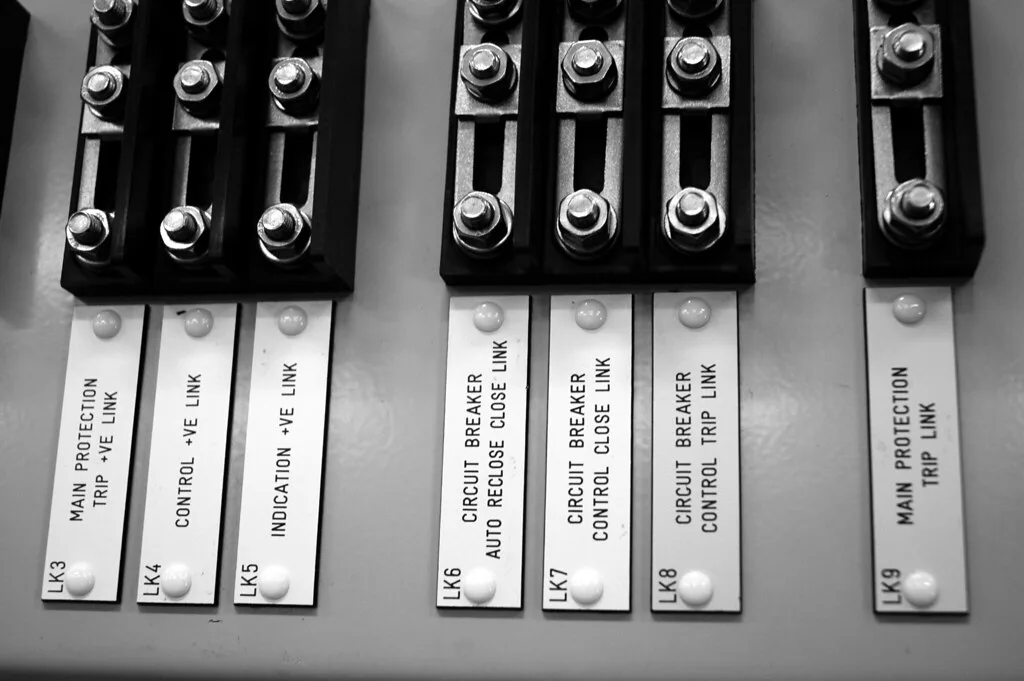
Photo: Ausgrid photos · CC BY 2.0 · openverse.org
What is the difference between a transmission and a distribution substation?
Not every substation does the same job. A transmission substation connects two or more transmission lines, at the same or different voltages, while a distribution substation is the last stop before the customer, transferring power from the transmission system down into the local network that actually reaches homes and businesses.
What is a mobile substation?
A mobile substation packages the same equipment, a transformer, switchgear, metering and protection relays, onto a trailer, skid or container that can be trucked, railed or shipped to site. Utilities bring one in to keep power flowing during a planned outage, to add capacity during peak demand, or to restore supply quickly after a permanent substation is damaged, without waiting for new civil works to be built.
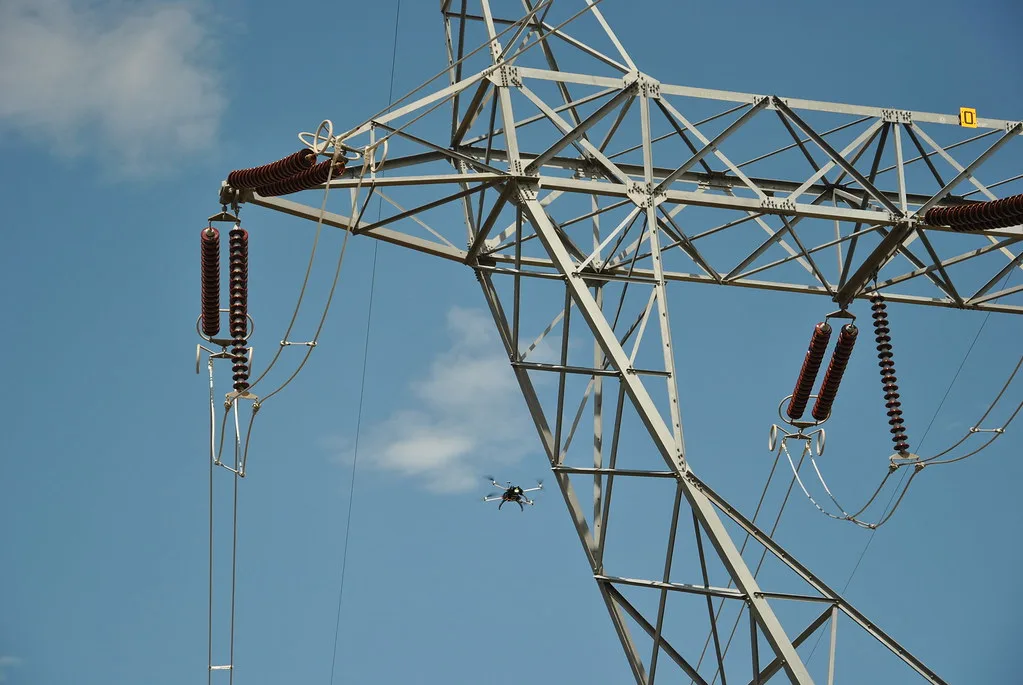
Photo: Western Area Power Admin · CC BY 2.0 · openverse.org
Which parts of a substation do we supply into Taiwan?
We trade the components that live inside this equipment, not the substation itself. CEDASPE's bushings carry the conductor safely through a transformer's tank wall, Messko's thermometers, oil level indicators and Buchholz relay protect and monitor the oil-filled transformer at the heart of the yard, Musthane's air cells keep that same oil from degrading, c.a.p.t.'s de-energized tap changers set the transformer's turns ratio, and SAFT's industrial batteries are exactly the DC backup the control room above depends on. Our engineering team, which includes engineers who previously worked at Fortune Electric and Allis Electric, has represented these lines for 10+ years and matches parts to the equipment they are going into, not just a part number on a drawing.
Talk to our engineering team
Specifying equipment for a substation project?
Tell us the equipment type and the voltage class, and we will match it to the right principal line.
Contact Us