2026-09-12
What is a transformer bushing?
A transformer bushing lets a live conductor pass through a grounded tank wall without arcing to it — governed by IEC 60137, in oil-impregnated paper (OIP), resin-impregnated paper (RIP), or resin-impregnated synthetic (RIS).
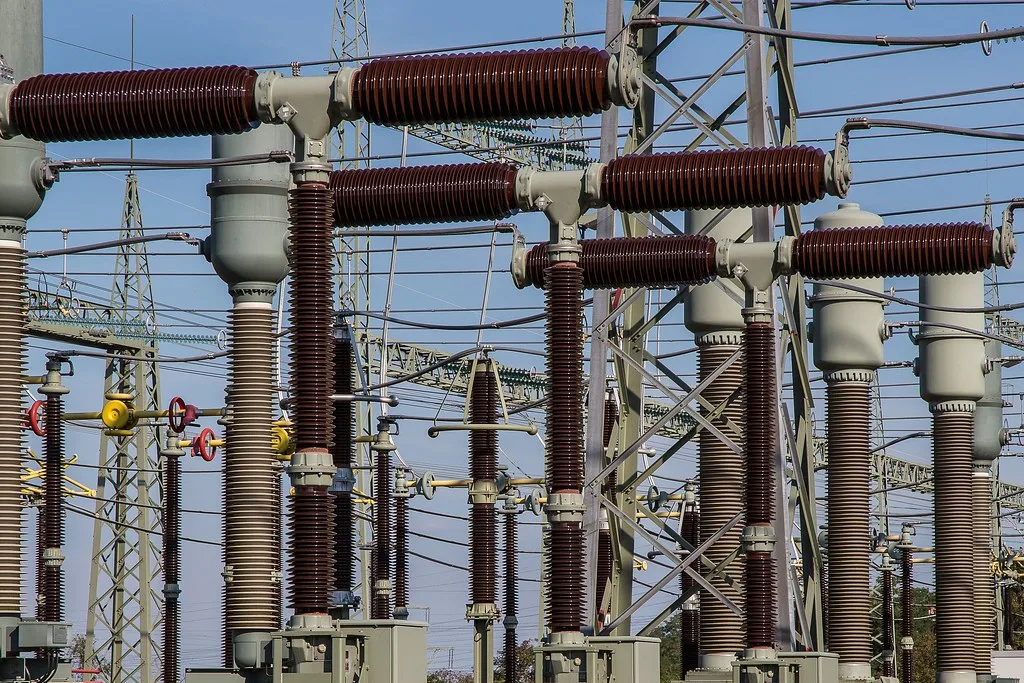
Photo: Homedust · CC BY 2.0 · openverse.org
What actually fails first
Bushings are responsible for roughly 12% of major transformer failures, and CIGRE Working Group A2.37's data puts that figure closer to 17% for transmission transformers above 100kV. Unlike many transformer component failures, a bushing failure is often catastrophic rather than gradual — a bushing sits at the boundary between the transformer's oil-filled tank and the outside air, so a serious failure can ignite the transformer's own oil. That combination — meaningful failure share plus high consequence when it happens — is why bushing condition gets more monitoring attention than its size on the bill of materials would suggest.
OIP, RIP, or RIS
All three insulation systems are tested to IEC 60137, but they age differently and that affects both storage and in-service risk. Oil-impregnated paper (OIP) is the oldest and still the most common — an oil-filled construction rated Class A (105°C). Resin-impregnated paper (RIP) is roughly 50% lighter and rated Class E (120°C), a real advantage for handling and tower-mounted applications, but the paper core is hygroscopic — it absorbs moisture during storage if not kept properly sealed, a real risk long before the bushing is ever energized. Resin-impregnated synthetic (RIS) solves that specific problem by replacing the paper with a synthetic fabric core, removing the storage-moisture risk while keeping RIP's weight advantage.
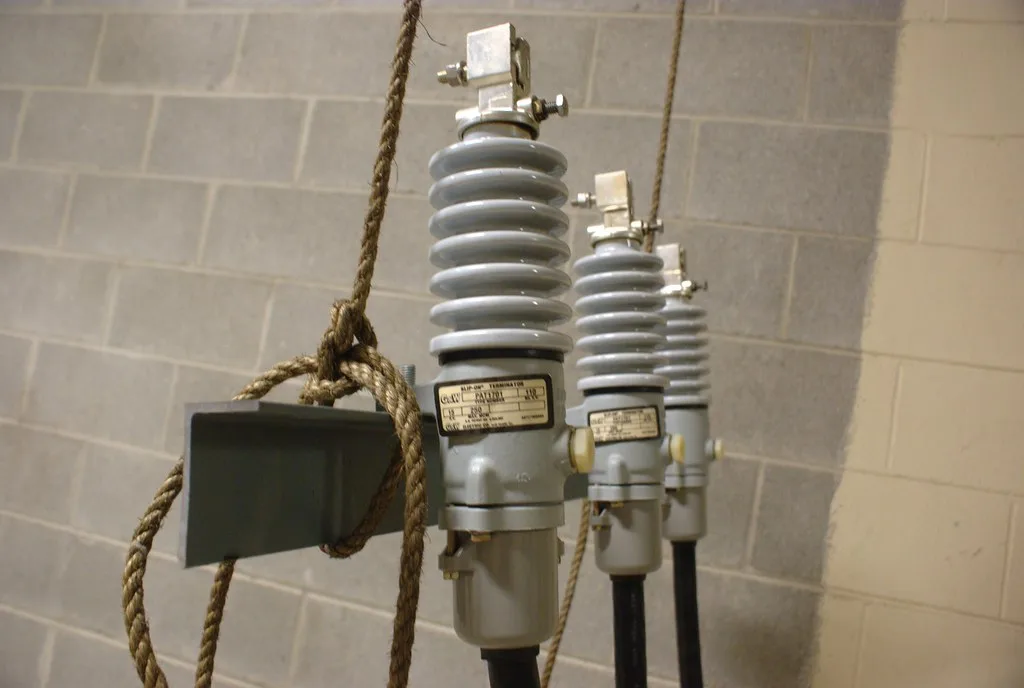
Photo: vaxomatic · CC BY 2.0 · openverse.org
Tan delta: the test that catches it first
Capacitance and dissipation factor testing — commonly called tan delta — is the standard way to catch bushing insulation degradation before it becomes a failure. A modern test sweeps frequency from roughly 15 to 400 Hz rather than testing at a single point, which reveals moisture and aging patterns a single-frequency reading can miss. One detail worth knowing even if you never run the test yourself: most bushings have two capacitance taps, C1 and C2. C1 measures across the full main insulation and is what most routine tests report. C2 — measuring a much thinner outer layer — is more sensitive to moisture ingress specifically, and catches it earlier than C1 does. A test that only reports C1 is not wrong, but it is missing the tap that would flag moisture problems first.
What we see most often
Representing CEDASPE's bushing line for years, the recurring issues we see are rarely about the bushing itself. Storage and moisture management get skipped, especially with hygroscopic RIP units, and it only shows up once the unit is in service. Commissioning tests get treated as a formality rather than a real gate — signed off without being properly read. Retrofit projects mismatch turret fittings against the original hardware, which surfaces as a fit problem on site instead of at the drawing stage. And routine testing that only reads the C1 tap misses exactly the failure mode — moisture ingress — that C2 would have caught first.
Talk to our engineering team
Need help assessing a bushing specification or condition?
Tell us your transformer specification, bushing type, and current test data, and we'll advise on the right testing or replacement approach.
Contact Us