2026-09-29
What Is a Substation Battery For?
A substation battery keeps DC power available for protection, control and breaker-trip circuits when the AC supply is interrupted. Without it, a fault that trips the incoming feeders can leave the substation unable to trip its own breakers or re-energize.
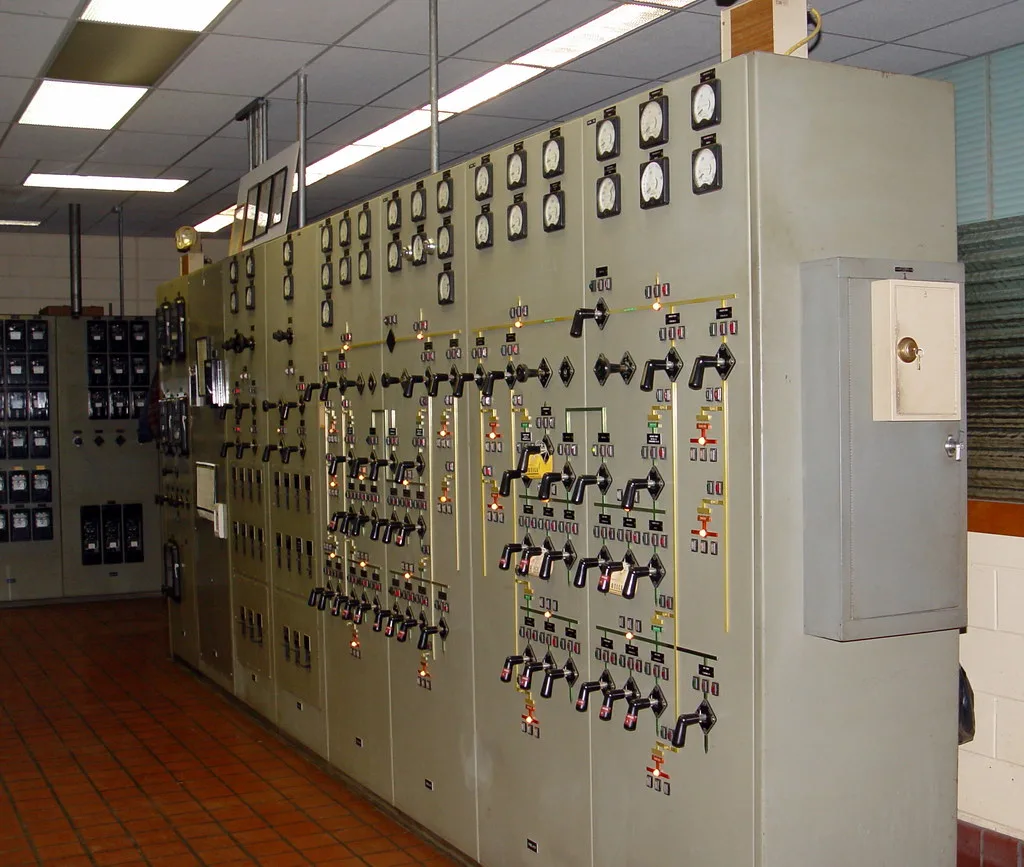
Photo: Mike Tewkesbury · CC BY-ND 2.0 · openverse.org
Why can't the substation just run on AC?
Substation DC auxiliary systems typically run at 110 V or 220 V and supply the relay protection, control and interlocking circuits. During a fault, the AC auxiliary supply can disappear the moment the incoming feeders trip, and re-energizing the substation afterward depends entirely on the DC system that is still up, powered by the battery.
What actually depends on it?
The DC system supplies relay protection, control and interlocking circuits directly. For a substation important enough to warrant it, the DC system is doubled into two independent battery-and-charger sections so a fault or maintenance on one side never removes tripping capability from the other.
What keeps the battery itself reliable?
Batteries are normally kept in a separate, ventilated room, and room temperature should not exceed 25°C, since heat above that significantly shortens battery life. The main fuses are supervised, with an alarm raised the moment one blows, because a DC system that looks fine on paper but has a blown fuse is not actually backing anything up.
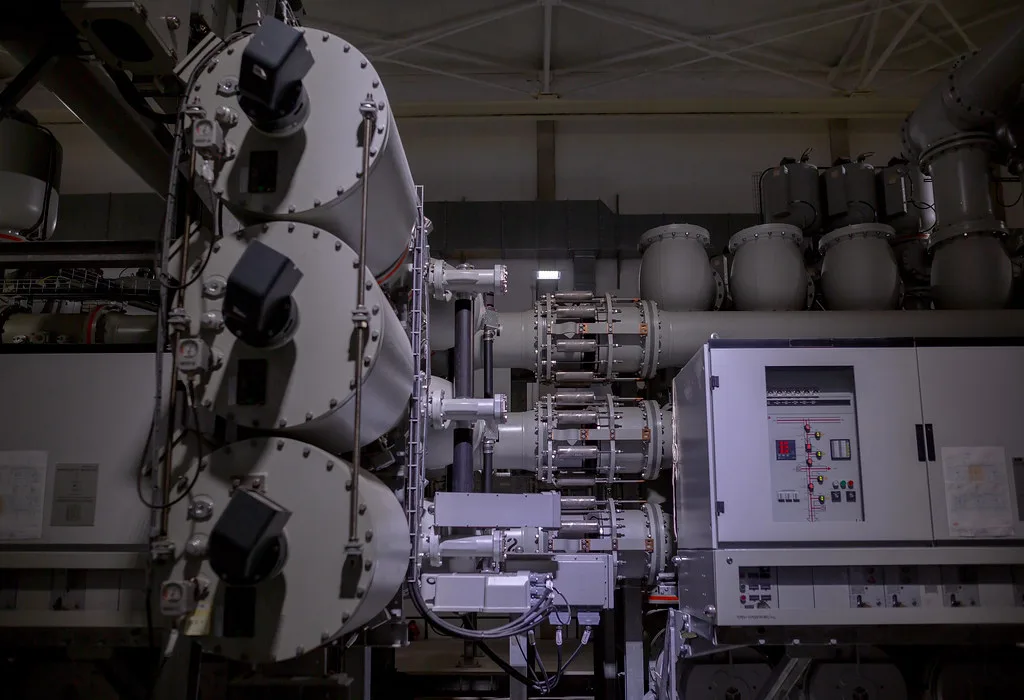
Photo: EU-Ukraine cooperation · CC BY-SA 2.0 · openverse.org
What does the battery itself look like?
Saft's Uptimax is a pocket-plate nickel-cadmium battery built for exactly this kind of standby duty, installed in demanding locations including unmanned utility substations, where it must deliver power to reconfigure switchgear or keep protection and control circuits running. A narrow 1.39 V/cell charging window means it needs no extra boost-charge diodes in the charger, and a fast recharge can still reach 95 percent state of charge within 8 hours. Because the electrochemistry change didn't alter the physical cell, it installs as a direct, mechanically identical replacement for existing lead-acid or older nickel batteries.
What we see, representing this line in Taiwan
We have represented SAFT's industrial battery line for 10+ years. Most enquiries come down to a straightforward swap question: replacing an ageing lead-acid or nickel bank without redesigning the charger or the rack, and our engineering team, which includes engineers who previously worked at Fortune Electric and Allis Electric, checks that against the existing DC system before we quote.
Talk to our engineering team
Replacing or specifying a substation battery bank?
Tell us the DC system voltage and the existing charger setup, and we will confirm the right SAFT configuration.
Contact Us