2026-10-11
How Substations Are Designed
Substation design balances reliability against land and cost — the two biggest calls are air- or gas-insulated build, and how the busbars are arranged.
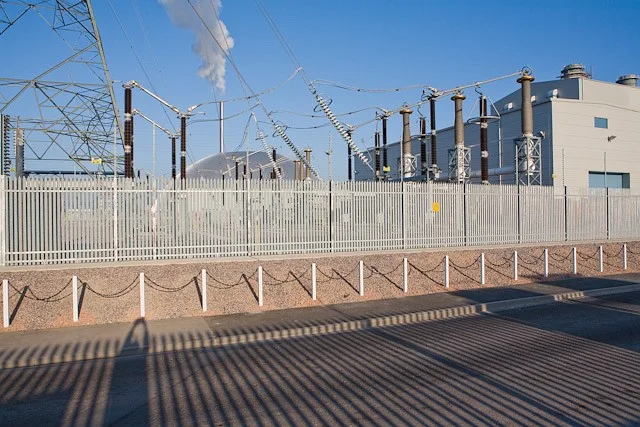
Photo: Peter Facey · CC BY-SA 2.0 · openverse.org
What decisions shape a substation's design?
Our post on what a substation is covers the equipment and the primary/secondary/auxiliary split; this one goes a layer deeper into how engineers actually land on a design. Land availability and cost are usually the first constraint, alongside how long construction can realistically take, transportation limits for getting heavy equipment to site, and the need to get the substation running quickly. Prefabrication is a common way to bring the construction cost down against those limits.
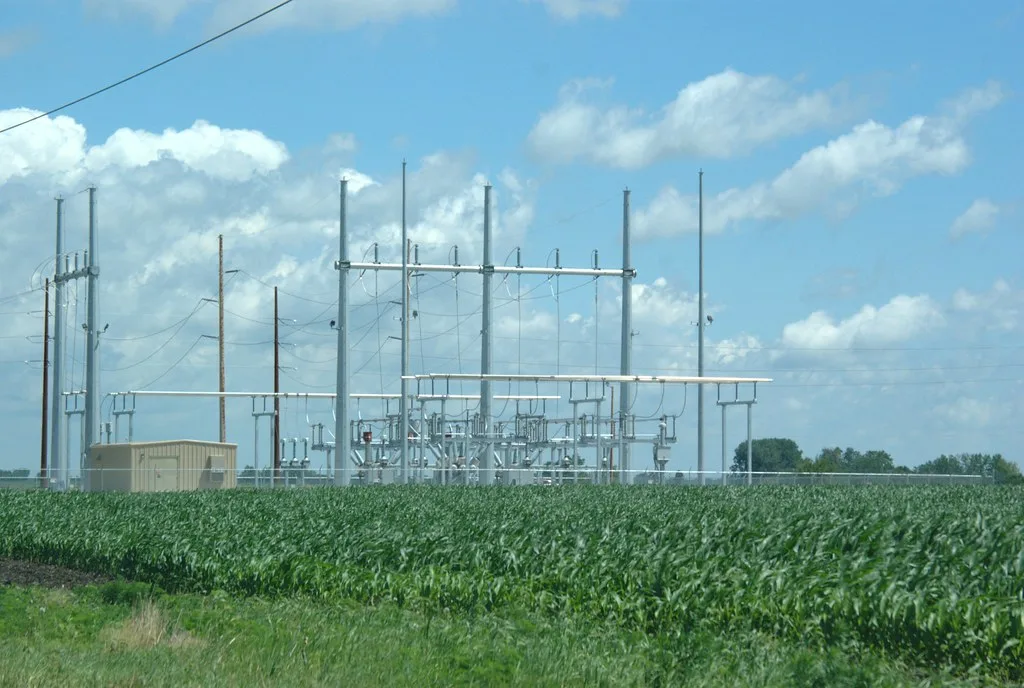
Photo: vaxomatic · CC BY 2.0 · openverse.org
Air-insulated or gas-insulated — how is that decided?
The choice is largely economic. An air-insulated substation (AIS) costs less to build, but a gas-insulated substation (GIS) needs only a fraction of the land area — and as the price gap between the two has narrowed, air-insulated, indoor, high-voltage substations are no longer installed above 145 kV. GIS tends to win in urban areas where land is expensive or unavailable, in mountainous sites where preparation costs are high, and in heavily polluted environments, since its insulation is sealed away from the outside air. It also needs less routine maintenance thanks to its sealed construction, and is more resilient in coastal, desert and high-humidity regions, while AIS stays the cheaper, simpler choice in moderate climates with land to spare.
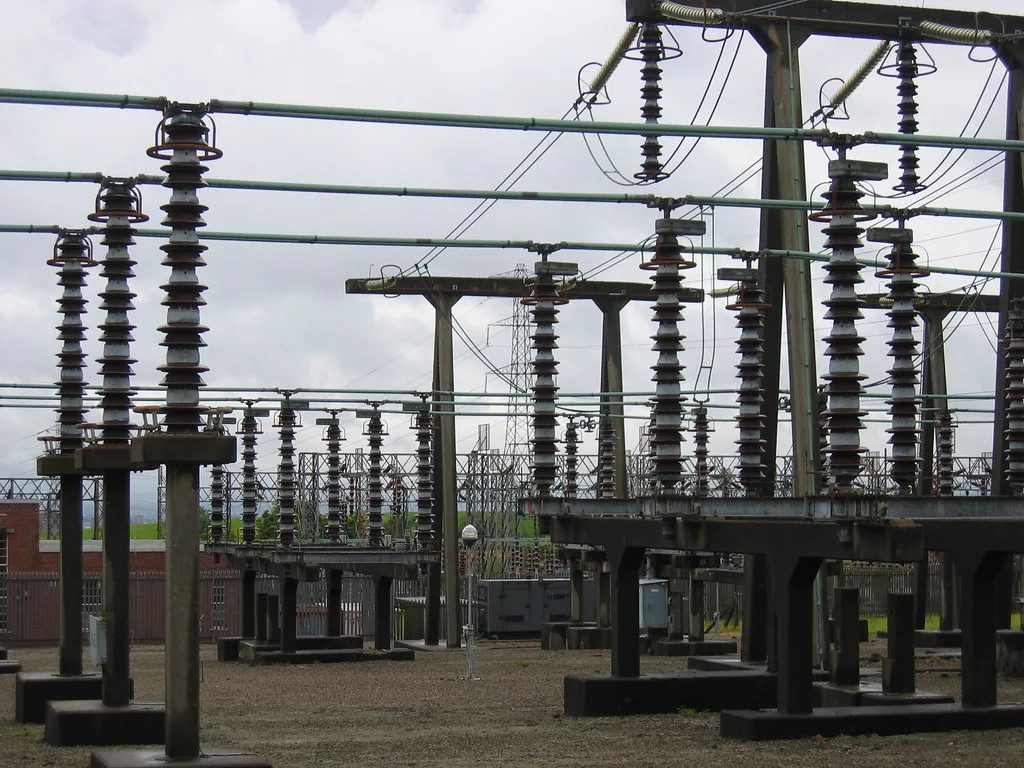
Photo: cowlet · CC BY 2.0 · openverse.org
How does the busbar layout get chosen?
A single bus, where every circuit shares one common bus through its own breaker, is the simplest and cheapest layout, but a bus fault or bus maintenance interrupts every circuit connected to it. A main-and-transfer scheme adds a second, normally de-energized bus so a breaker can be pulled for maintenance without interrupting its circuit, at modest extra land and cost. A double breaker/double bus scheme gives every circuit two dedicated breakers onto two independent buses, so a single bus fault never drops the circuit — the most robust and most expensive option, reserved for critical transmission nodes and major load centres.
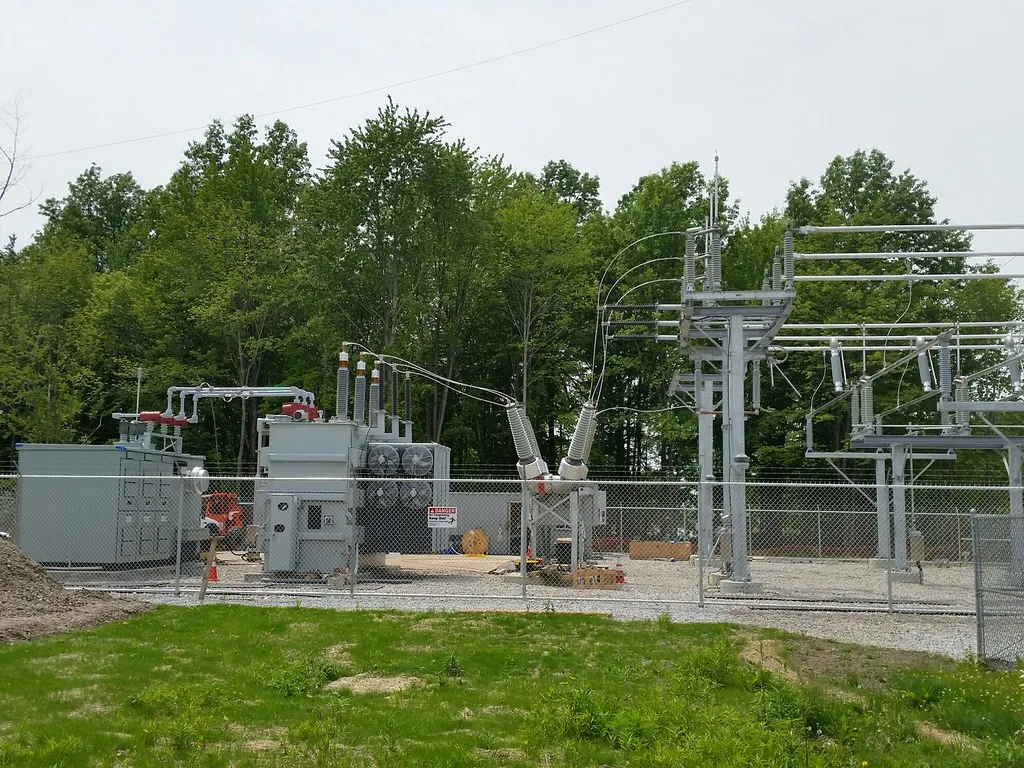
Photo: FirstEnergy Corp. · CC BY-ND 2.0 · openverse.org
What does this mean for the equipment inside?
Every one of those decisions changes what gets specified. A higher voltage class or a GIS build changes the bushing rating, a more redundant bus scheme means more protection and monitoring points to cover, and a design with less on-site maintenance access leans harder on the DC backup that keeps protection and control running between visits. Our engineering team, which includes engineers who previously worked at Fortune Electric and Allis Electric, reads the design before quoting the parts, not the other way around.
Talk to our engineering team
Specifying components for a substation design?
Tell us the build type and voltage class, and we will match the components to it.
Contact Us