2026-09-21
What Are the Main Types of Transformers?
Transformers are sorted three ways: by what they do to voltage (step-up, step-down or isolation), by grid position (power or distribution) and by cooling (oil-filled or dry-type). The third split decides which parts a transformer carries.
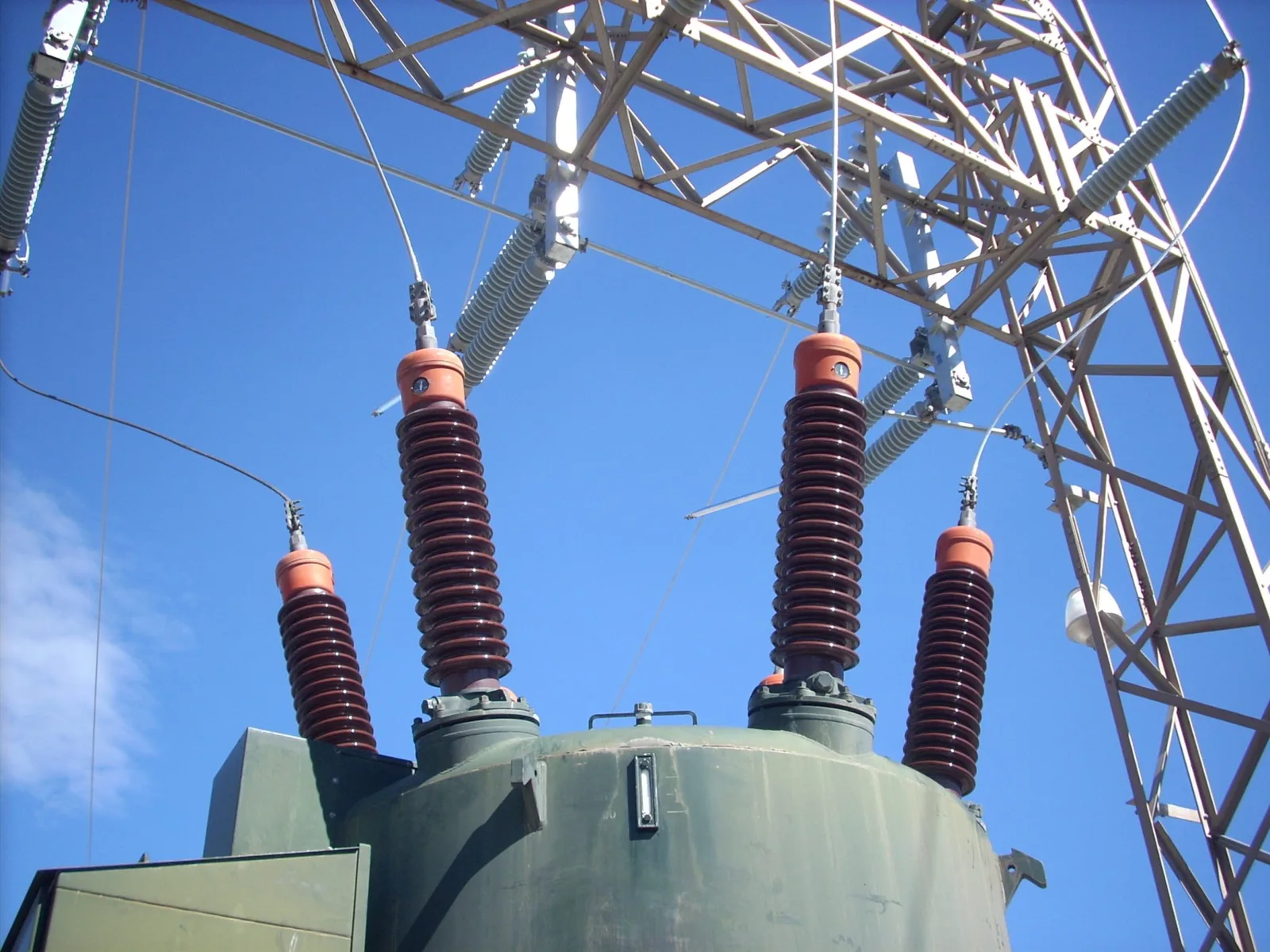
Photo: Darryl · CC0 1.0 · openverse.org
How are transformers classified by what they do to voltage?
Transformers change AC voltage levels, and are called step-up or step-down depending on whether they raise or lower it. Isolation transformers are a third kind: they prevent leakage of current into the secondary circuit, and are used in medical equipment and at construction sites.
What is the difference between a power transformer and a distribution transformer?
A power transformer sits at the core of transmission and distribution systems, moving large blocks of energy over long distances and into regional networks. A distribution transformer makes the final voltage reduction, stepping line voltage down to the level the customer uses. Distribution units typically rate below 200 kVA, though some national standards allow up to 5,000 kVA. They are energized 24 hours a day, so reducing iron losses is vital in their design.
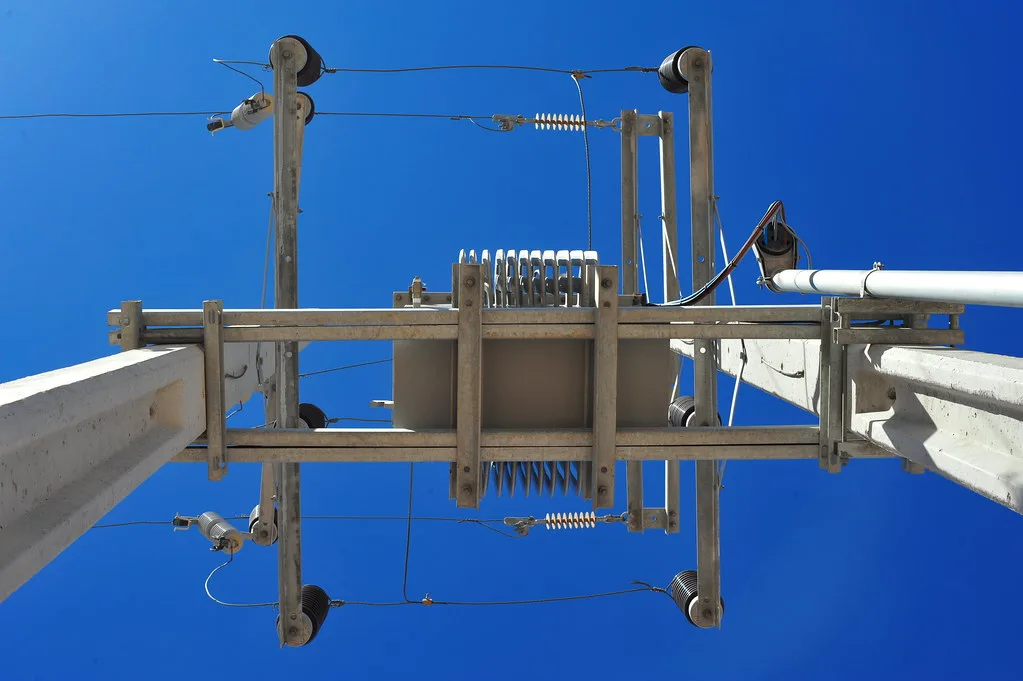
Photo: Chris Hunkeler · CC BY-SA 2.0 · openverse.org
Should a transformer be oil-filled or dry-type?
A liquid-filled transformer holds a dielectric fluid that both cools and insulates the windings, while a dry-type cools by natural convection with the surrounding air. Liquid-filled units suit outdoor use, and dry-types are designed mainly for indoor use because they contain no fluid and need no containment. Large transformers in substations have their core and coils immersed in oil. That oil is the reason the accessories in the next section exist.
Which parts does each type carry?
A dry-type has no oil to look after, so most of the parts below belong to the oil-filled types. The conservator, a reservoir at the top, isolates the oil from the atmosphere as coolant level and temperature change, and an air cell inside it keeps ambient air and oxygen away from the oil and reduces the chance of moisture getting in. A Buchholz relay sits in the pipe between the tank and the conservator, thermometers read oil and winding temperature, and oil level indicators check the level in the conservator. A de-energized tap changer sets the turns ratio for transformers that can be switched off to change it.
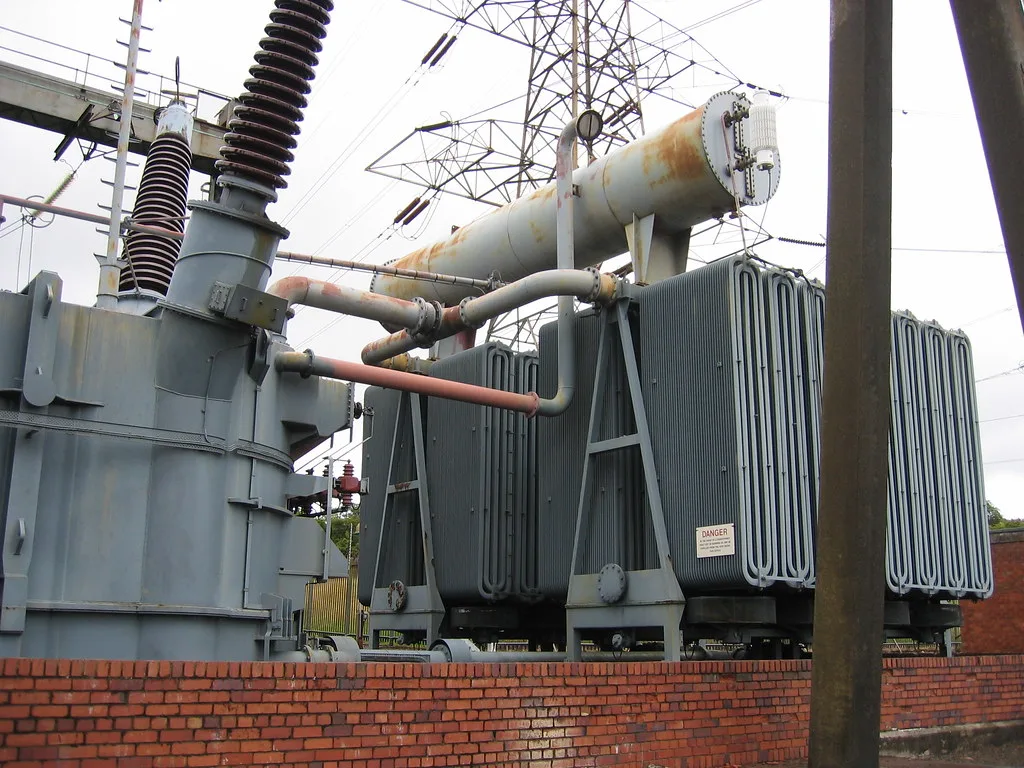
Photo: cowlet · CC BY 2.0 · openverse.org
Which of these parts do we supply in Taiwan?
We represent four lines for the parts above: CEDASPE bushings from 1 kV to 52 kV, Messko thermometers and Buchholz relays, Musthane conservator air cells, and de-energized tap changers for distribution and power transformers from c.a.p.t., an Italian maker. We have represented our current principals for 10+ years. Our engineering team, which includes engineers who previously worked at Fortune Electric and Allis Electric, matches parts to the transformer type, oil-filled or dry, distribution or power.
Talk to our engineering team
Specifying parts for a transformer build?
Tell us the transformer type and rating and we will match it to the right line we represent.
Contact Us