2026-11-05
What Is a Substation Transformer?
A substation transformer steps voltage between transmission and distribution, with bushings, cooling and protective devices built around it.
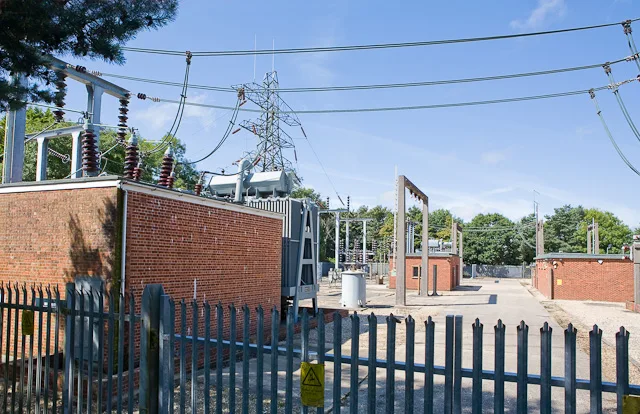
Photo: Peter Facey · CC BY-SA 2.0 · openverse.org
What does the transformer do inside a substation?
A transmission substation holds transformers, circuit breakers and switches, protective relays, and control and monitoring equipment, and the transformer is always at the centre of the operation: one substation transformer steps voltage up from the power station for the lines, and a second substation steps it back down at the destination.
What makes it different from other transformers?
A substation transformer has a robust design, scales to large electrical loads, and is typically installed inside a fenced yard because of its live external components and higher operating voltages. Its defining features are external bushings, radiator-mounted cooling, visible gauges and protection devices, and a robust tank and winding design. The bushings change with voltage: units at 69 kV and above commonly use larger condenser-style bushings that are often shipped separately and installed in the field with testing before and after, while smaller substations, generally below 35 kV, often use solid bushings.
How is a substation transformer rated and cooled?
Substation design starts to change at the 35 kV or 5 MVA threshold, where winding construction, insulation, clearances, cooling and bushing selection all become more complex; above it you are in what the industry calls power-class design, a term with no single, clear definition. Cooling is most often radiators with external fans, and the nameplate shows it as a split rating such as 2500/3125: the base kVA without fans, and the higher kVA available when the fans are running. Larger units may use several cooling stages, each with its own fans and alarms, with extra stages engaging automatically if temperature keeps rising.
What protects it, and how is it looked after?
Substation transformers carry winding temperature indicators, sudden pressure relays with alarm and trip functions, pressure relief devices, and gauges with alarm contacts for remote monitoring. Because oil-filled units can leak or burn, they are often built with bunded areas to stop oil escaping and with firewalls to stop a fire spreading, and fire vehicles are given a path in. For maintenance, infrared scanning finds hot spots, and dissolved gas analysis shows when the oil needs filtering or replacing.
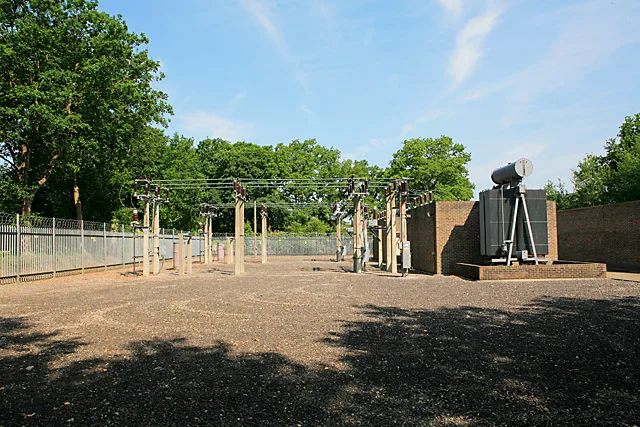
Photo: Peter Facey · CC BY-SA 2.0 · openverse.org
Which parts of a substation transformer do we supply into Taiwan?
We trade the parts that sit on the transformer, not the transformer itself. CEDASPE's bushings run from 1 kV to 52 kV, and Messko's thermometers measure oil and winding temperature while its MTO oil level indicators come with or without switching contacts. Our engineering team, which includes engineers who previously worked at Fortune Electric and Allis Electric, has represented these lines for 10+ years and checks each part against the transformer it is going on.
Talk to our engineering team
Specifying parts for a substation transformer?
Tell us the transformer rating and voltage class, and we will match bushings and monitoring parts to it.
Contact Us